

Ask any high school teacher what eats up class time, and the answer is rarely teaching. It’s taking attendance, passing out papers, fixing the projector, collecting homework, and hunting for the one marker that still works. By the time the lesson starts, five minutes are gone.
Classroom jobs for high school students fix a lot of that. Hand those small tasks to the people sitting right there, and you get your time back. Students get something out of it too. Most teens don’t want to be treated like little kids, but they do want to feel useful. A real job with a real purpose does that better than any participation grade.
The trick is picking jobs that don’t feel childish. Nobody wants to be line leader at sixteen. They will, however, run the slides, lead the warm-up, or be the go-to person for absent work.
Below are 20 classroom jobs that work in high school, simple ways to assign them, and free printables you can use tomorrow: a job list, an application form, an assignment chart, and a rotation chart.
Why Classroom Jobs Are Required in High School
Classroom jobs aren’t a bonus activity. They solve problems you already deal with every day.
Responsibility. Teens are a year or two away from running their own lives. A job gives them something real to own, and they notice when it doesn’t get done.
Time. Attendance, handouts, and tech setup add up fast. Pass them off and you get 5-10 minutes back every class.
Participation. The student who never raises a hand can still run the slides or collect homework. It’s an easy way to be part of the room.
Résumé value. “Managed class attendance” or “led daily warm-ups” shows reliability and leadership, which colleges and employers look for. Students can list it on a high school resume too.
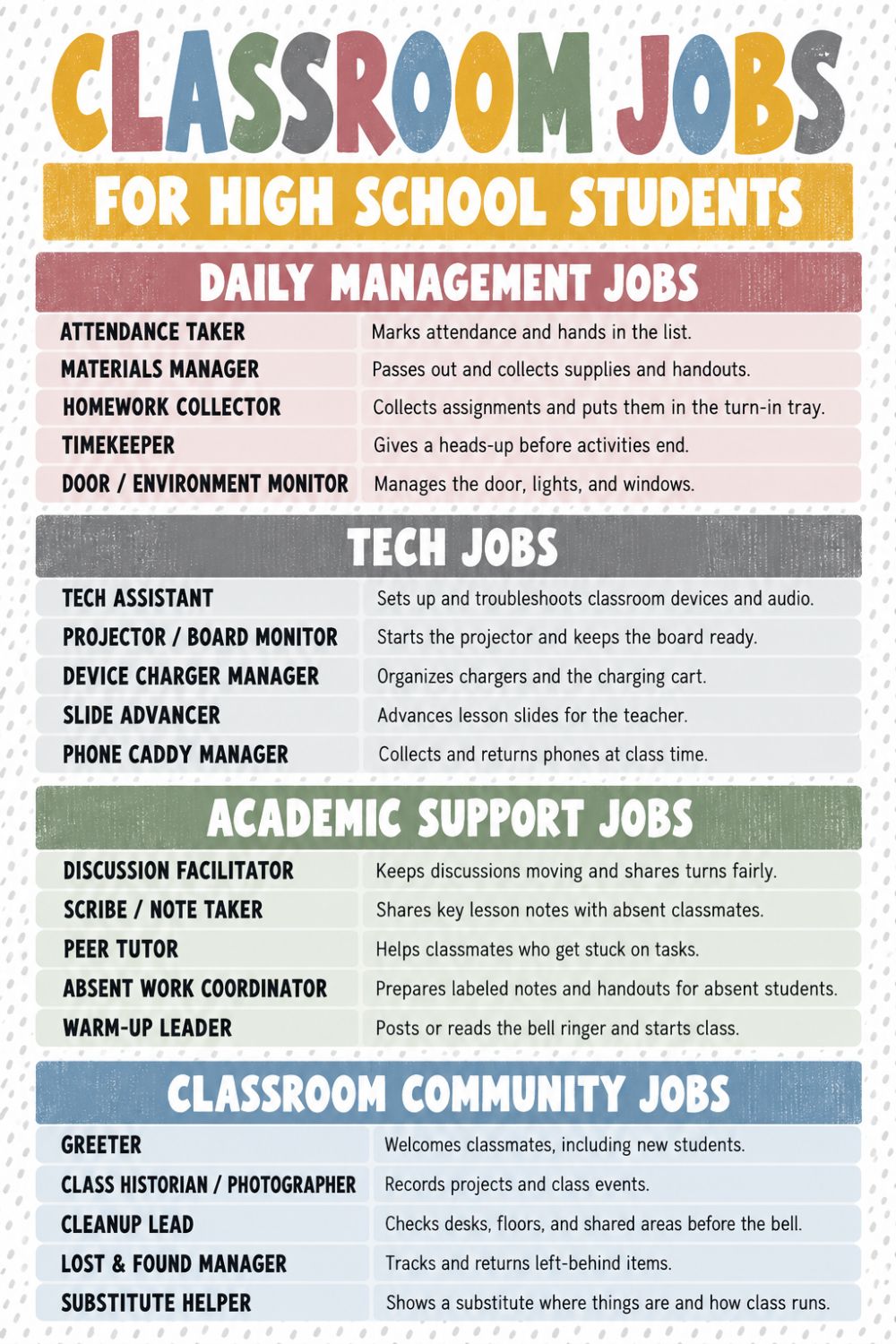
20 Classroom Jobs for High School Students
You don’t need all 20 jobs at once. Most classes run well with 6 to 10, depending on class size and what slows you down the most. Start with the tasks that eat your time, then add more as students settle in. The jobs below are grouped by type, so you can pick a few from each group.
Daily Management Jobs
These are the routine tasks that happen every class. They make the biggest difference to your time, so start here if you’re only adding a few jobs.
- Attendance Taker: Marks who’s present at the start of class and hands you the list.
- Materials Manager: Passes out and collects supplies, handouts, and class sets.
- Homework Collector: Collects assignments at the door and stacks them in the turn-in tray.
- Timekeeper: Watches the clock and gives the class a heads-up before each activity ends.
- Door/Environment Monitor: Opens and closes the door, adjusts lights and windows, and keeps the room comfortable.
Tech Jobs
Tech problems stop a lesson fast. Give these jobs to students who already know their way around devices, and you won’t be the only one troubleshooting.
- Tech Assistant: Sets up and troubleshoots speakers, headphones, and student devices.
- Projector/Board Monitor: Turns the projector on and off and makes sure the board is clear and ready.
- Device Charger Manager: Hands out and collects chargers and keeps the charging cart organized.
- Slide Advancer: Moves the slides forward during lessons so you can walk around the room.
- Phone Caddy Manager: Collects phones at the start of class and returns them at the end.
Academic Support Jobs
These jobs connect students to the lesson itself. They work well for students who want more challenge, and they give classmates someone to ask besides you.
- Discussion Facilitator: Keeps group discussions moving and makes sure everyone gets a turn.
- Scribe/Note Taker: Writes up the key points of the lesson to share with absent classmates.
- Peer Tutor: Helps classmates who are stuck on the day’s task.
- Absent Work Coordinator: Gathers handouts and notes for absent students and labels them with their names.
- Warm-Up Leader: Posts or reads the bell ringer and gets the class started on time.
Classroom Community Jobs
These jobs build the feel of the room. They’re a good fit for students who like people over procedures, and they help new students settle in quickly.
- Greeter: Welcomes classmates at the door, especially new students.
- Class Historian/Photographer: Records class projects and events for a slideshow or scrapbook.
- Cleanup Lead: Checks that desks, floors, and shared areas are tidy before the bell.
- Lost & Found Manager: Keeps track of left-behind items and returns them to their owners.
- Substitute Helper: Shows a substitute teacher where things are and how the class runs.
Want all 20 jobs on one page? Grab them in the free printable classroom jobs pack.
How to Assign Jobs (Pick One Method)
There’s no single right way to hand out jobs. What matters is picking one method and sticking with it, so students know what to expect. Here are the three most common options for high school.
| Method | Pros | Cons |
|---|---|---|
| Rotating weekly or monthly | Fair, simple, and everyone tries different jobs | Students barely learn a job before it changes |
| Application and interview | Students choose jobs they care about and take them seriously | Takes more setup, and some students may feel left out |
| Random draw | Quick, fair, and no arguments over who gets what | Students can end up with a job they dislike |
Rotating Weekly or Monthly
Students move to a new job on a set schedule. Weekly works well for larger classes with many jobs. Monthly gives students time to get good at one role. This is the easiest method to run and the best choice if you’re new to classroom jobs.
Application and Interview
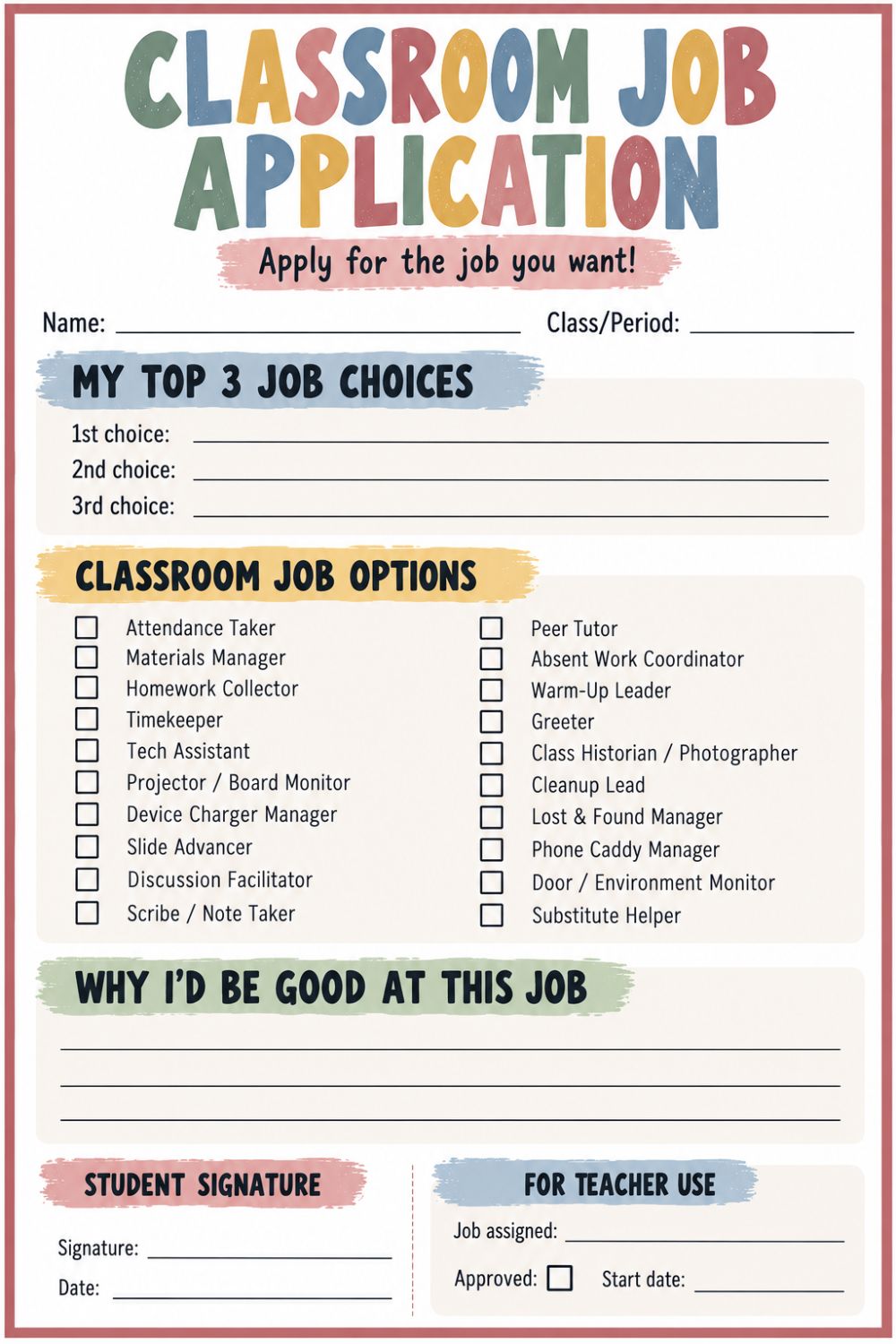
Students fill out a short form saying which jobs they want and why. You pick based on their answers, or hold a quick chat. It feels like a real job process, which teens tend to respond to. It works best for jobs that take responsibility, like Tech Assistant or Peer Tutor.
Random Draw
Pull names from a cup or use a random name picker. It’s the fastest way to assign jobs and avoids any hint of favorites. To keep it fair, let students swap with a classmate if both agree.
How to Set Up Classroom Jobs in 5 Steps
Setting up classroom jobs takes about an hour of prep, and most of it happens before the first day. It fits right into a first day of school checklist if you’re planning that already. Follow these five steps and the system will mostly run itself.
1. Choose 6-10 jobs that fit your class size
Look at where you lose time each class, then pick jobs that fix those problems. A class of 20 needs fewer jobs than a class of 35, and some jobs can be shared by two students. Start small. It’s easier to add jobs later than to take them away.
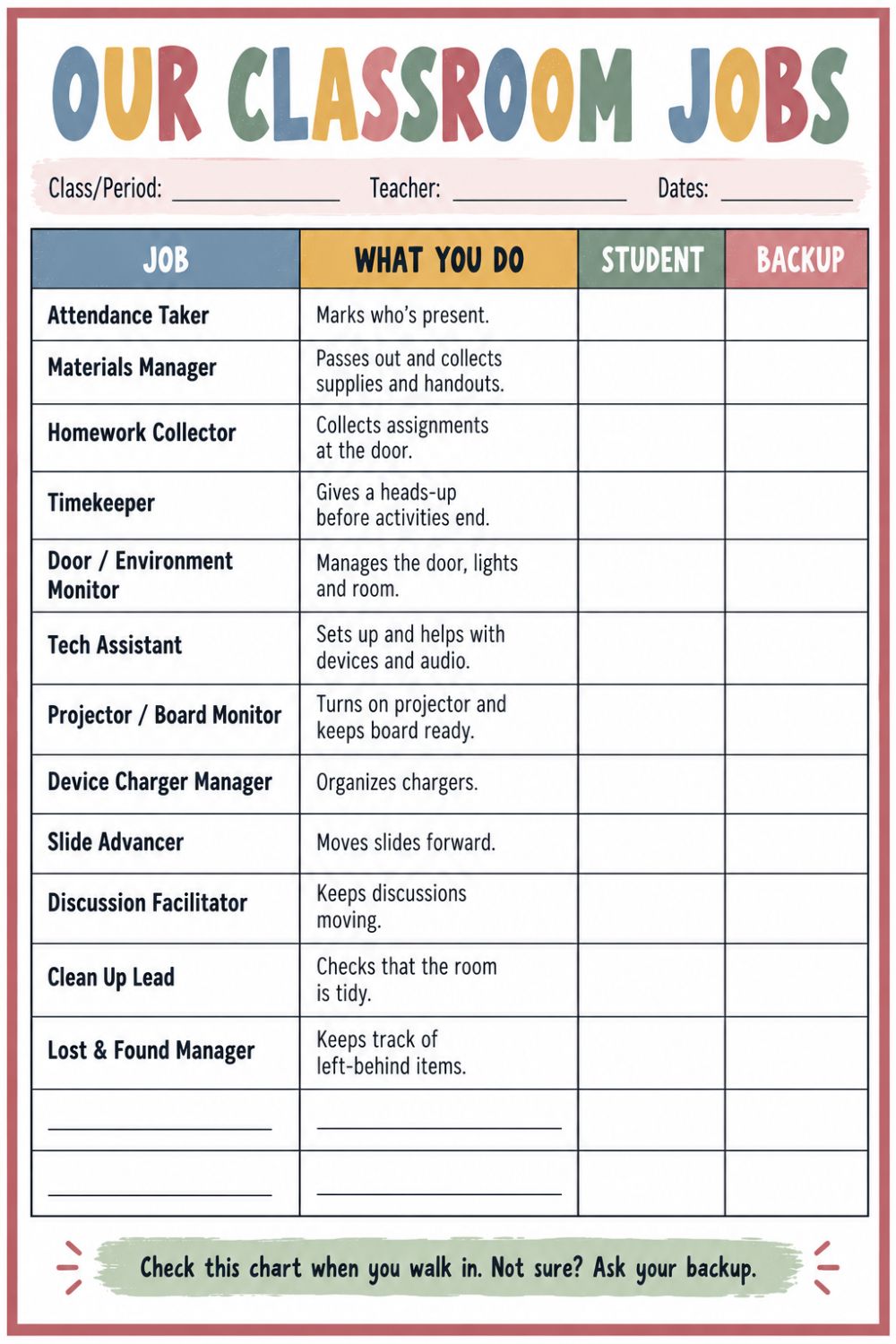
2. Print and post the job chart
Put the chart somewhere students can see it without asking you, like near the door or on a side wall. List each job and the student’s name next to it. When the chart is visible, students check it themselves, and you stop answering “what’s my job?”
3. Explain expectations on day one
Spend five minutes walking through each job: what it involves, when to do it, and what happens if the student is absent. Model one or two jobs out loud so students see exactly what “done” looks like. Clear expectations on day one save you weeks of reminders. It also helps to go over the jobs alongside your classroom rules, so students hear both together.
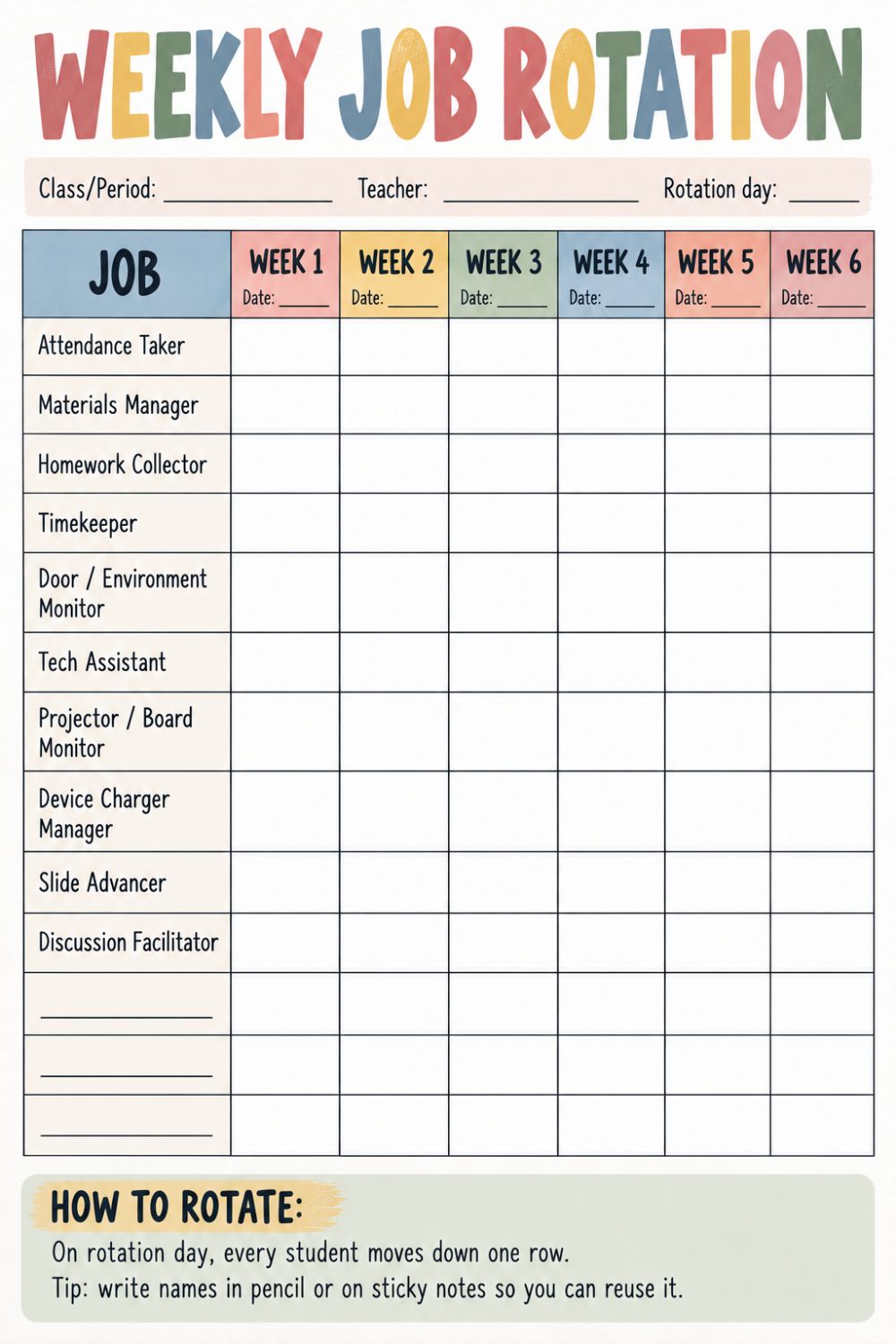
4. Rotate on a fixed schedule
Pick a rotation date and put it on the calendar, whether that’s every Friday or the first of the month. Students are more likely to take jobs seriously when they know when the next swap happens. If you chose application-based assignment, set a date to reopen applications instead.
5. Check in and give feedback
Take two minutes at the end of each week to ask what’s working. Thank students who do their job well, and have a quick, private word with anyone who’s slipping. If a job isn’t useful, change it or drop it.
Free Printable Classroom Jobs Pack
Everything in this post comes in one ready-to-print PDF. It has the job list, forms, and charts you need to run classroom jobs from day one, so you don’t have to design anything yourself.
What’s Inside the PDF
- Classroom Jobs List: All 20 jobs with one-line descriptions
- Job Application Form: For students who apply for the jobs they want
- Job Assignment Chart: A one-page chart to post by the door
- Weekly Job Rotation Chart: Tracks who does what, week by week
Print as many copies as you need, or save the PDF and print individual pages whenever you want.
Wrapping Up
Classroom jobs don’t need to be a big project. Pick a handful of jobs, choose one way to assign them, and let students take over the small stuff that keeps eating your class time. Within a few weeks, you’ll notice the difference.The room runs smoother, and your students have a real reason to show up and pitch in. Jobs work even better alongside solid classroom management strategies.
Start with just three or four jobs this week. You can always add more once the routine sticks, and the printable pack has everything you need to get going. For more ready-to-use resources, browse our free high school printables.

An Engineer, Maths expert, Online Tutor, and animal rights activist. I have more than 5 years of teaching experience and have worked closely with students with learning disorders. I have worked with special educators, counselors, and experts in dealing with common issues that students face during their academic journey.