
Staring at a blank page, not sure how to start your essay? You’re not alone. Most high school students get stuck on one of three things: the format, the topic, or the structure. This post fixes all three.
Below, you’ll find 10 essay examples that cover the types you’ll run into most in high school, from narrative and descriptive to argumentative and research essays. Each one comes with a sample prompt, so you know what a good topic looks like. You’ll also see a quick breakdown of what makes that essay work, whether it’s a strong hook, a clear thesis, or solid evidence. Need more topic ideas? Our list of 50 creative writing topics for high school essays is a good place to start.
Best part? Every essay has its own printable sheet, all bundled in one free PDF. Print it, read the example, and use it as a guide to write your own.
Skim the type you need, steal the structure (not the words), and get your draft done faster. No guessing, no overthinking, just clear examples you can actually use.
How to Use This Post
You don’t need to read this top to bottom. Use it like a toolkit.
Here’s the quickest way to get started:
- Find your essay type. Jump to the one your assignment asks for. Check the sample prompts, since they show what each type looks like.
- Read the example. Pay attention to the “why it works” notes. They point out the hook, thesis, and flow.
- Print the matching sheet. Each essay has its own printable in the PDF, numbered to match this post (Printable #1 goes with Essay #1, and so on).
- Write your own. Follow the same layout: how it opens, where the thesis sits, how each paragraph builds on the last.
One rule: copy the structure, not the words. Teachers spot copied writing fast, and your own voice will score higher anyway.
10 Essay Examples For High Schoolers
1. Narrative Essay
What it is: A story from your own life, told with a clear beginning, middle, and end.
Sample prompt: “Describe a time you failed and what changed.”
Why it works:
- Opens in the middle of the moment instead of “I want to tell you about…”
- Ends with what you learned, not just what happened
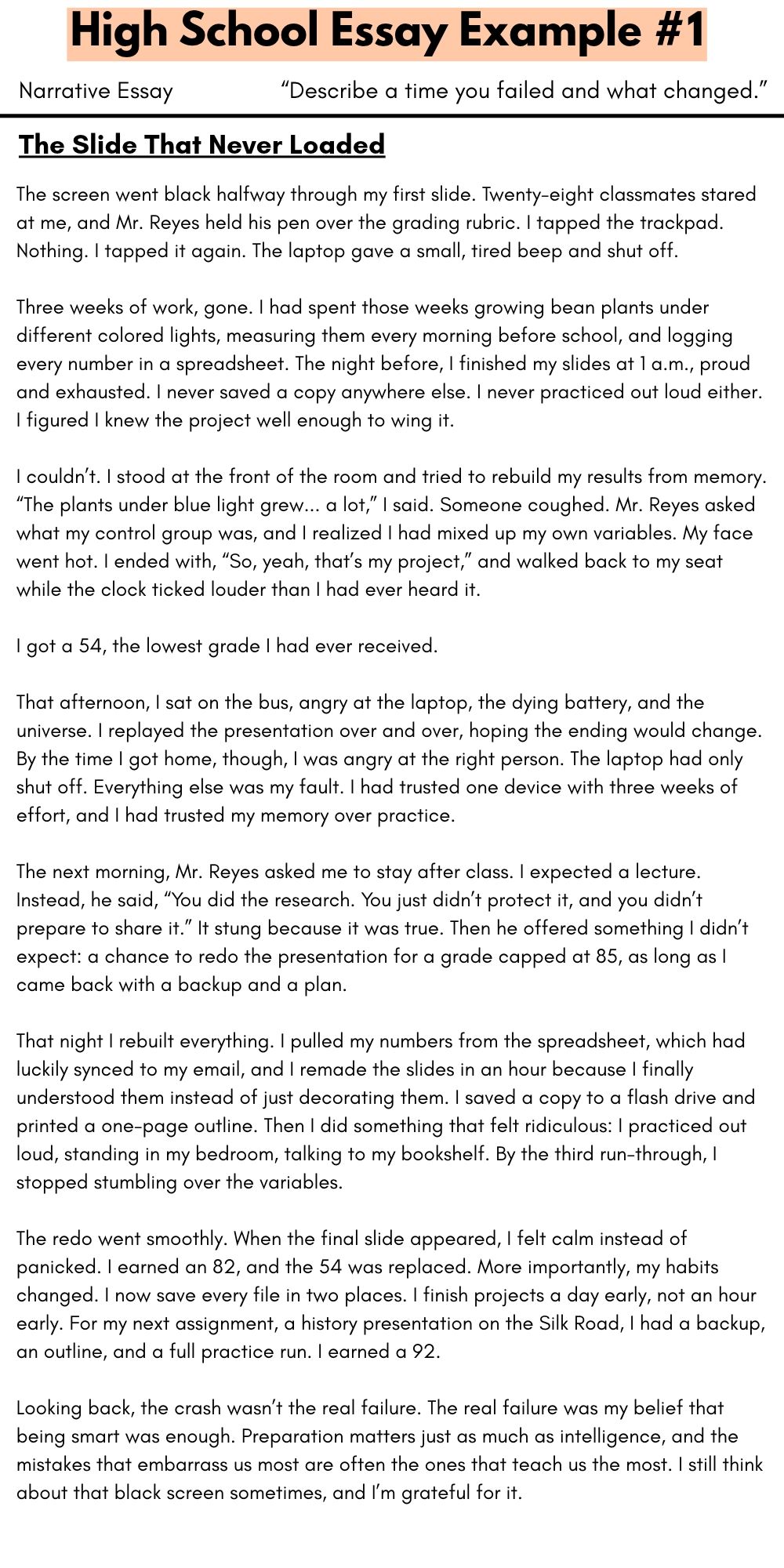
2. Descriptive Essay
What it is: A scene brought to life through sight, sound, smell, taste, and touch.
Sample prompt: “Describe your grandmother’s kitchen.”
Why it works:
- Specific details beat vague words (say “sizzling onions,” not “nice smell”)
- Every sentence supports one main feeling or mood
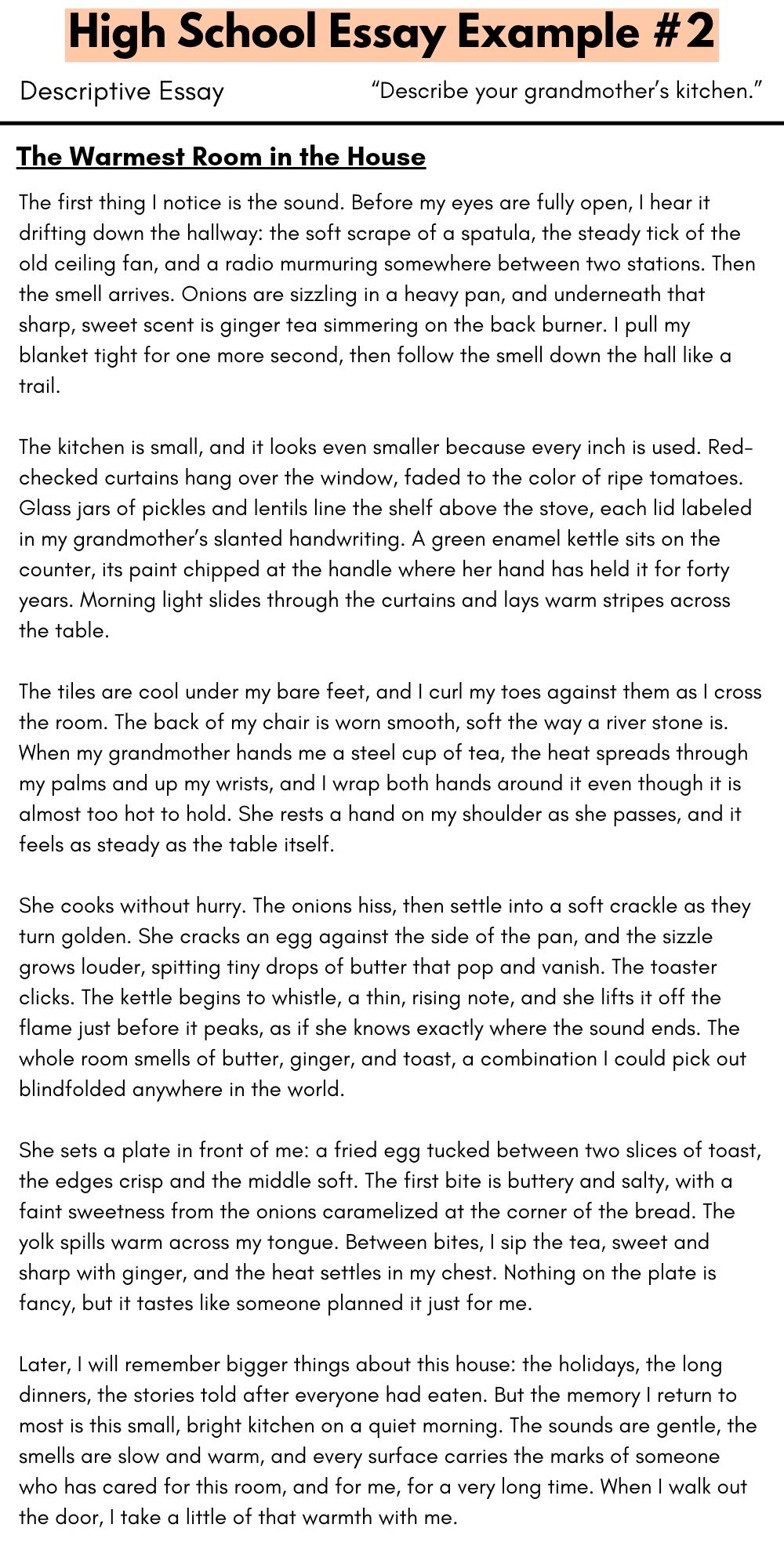
3. Expository Essay
What it is: A clear explanation of a topic using facts, with no opinion.
Sample prompt: “How does social media affect sleep?”
Why it works:
- One idea per paragraph, backed by facts or examples
- Reads like you’re explaining it to a friend who knows nothing about it
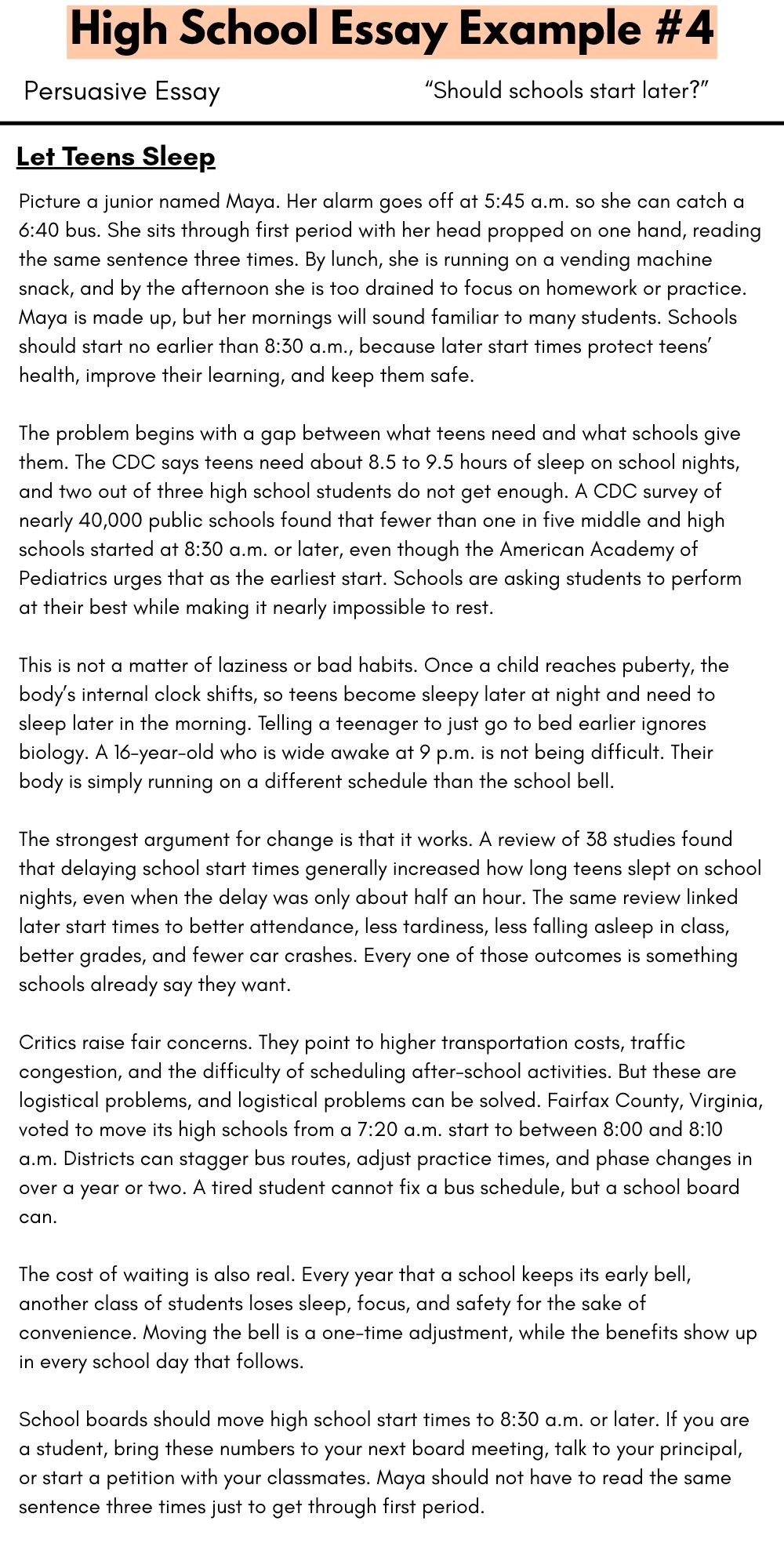
4. Persuasive Essay
What it is: An essay that convinces the reader to agree with you.
Sample prompt: “Should schools start later?”
Why it works:
- Uses emotion and logic together, like real student stories plus sleep research
- Closes with a clear call to action
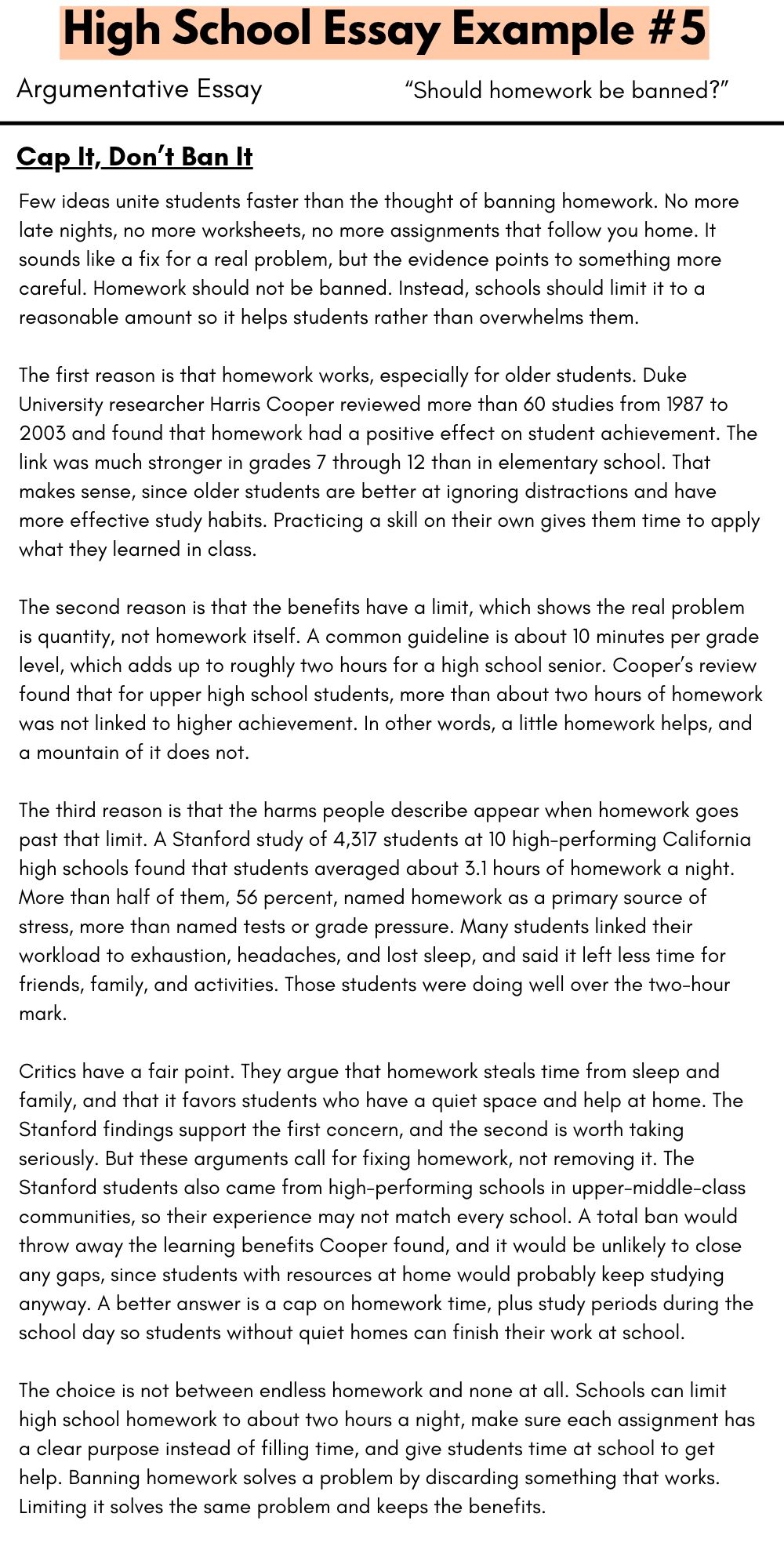
5. Argumentative Essay
What it is: A claim backed by evidence, plus a response to the other side.
Sample prompt: “Should homework be banned?”
Why it works:
- Includes a counterargument and answers it, which makes the claim stronger
- Relies on facts and sources, not feelings
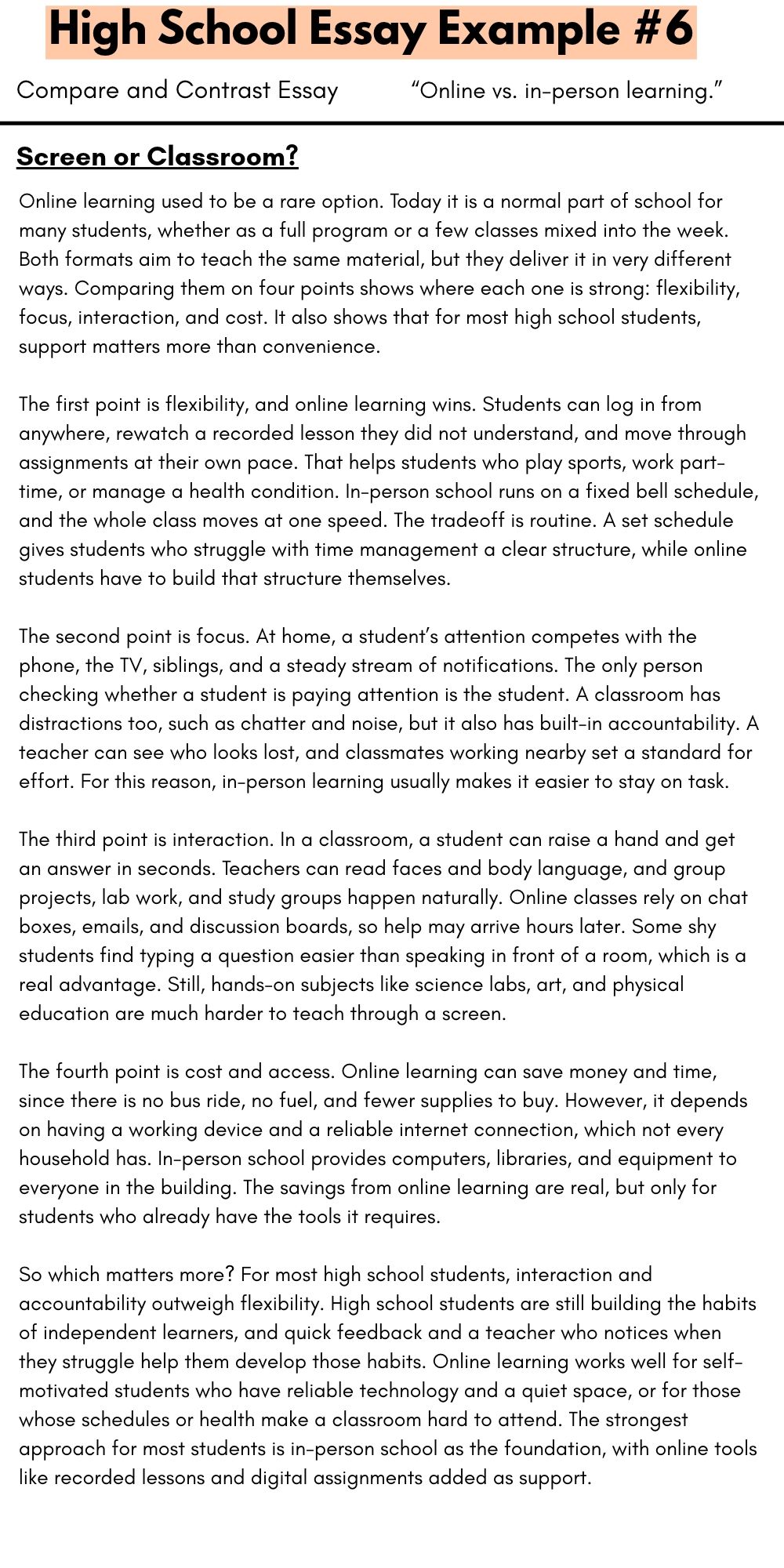
6. Compare and Contrast Essay
What it is: Two subjects examined side by side to show how they’re alike and different.
Sample prompt: “Online vs. in-person learning.”
Why it works:
- Uses the same points for both subjects (cost, flexibility, focus), so the comparison stays fair
- Goes beyond listing differences to say which matters more
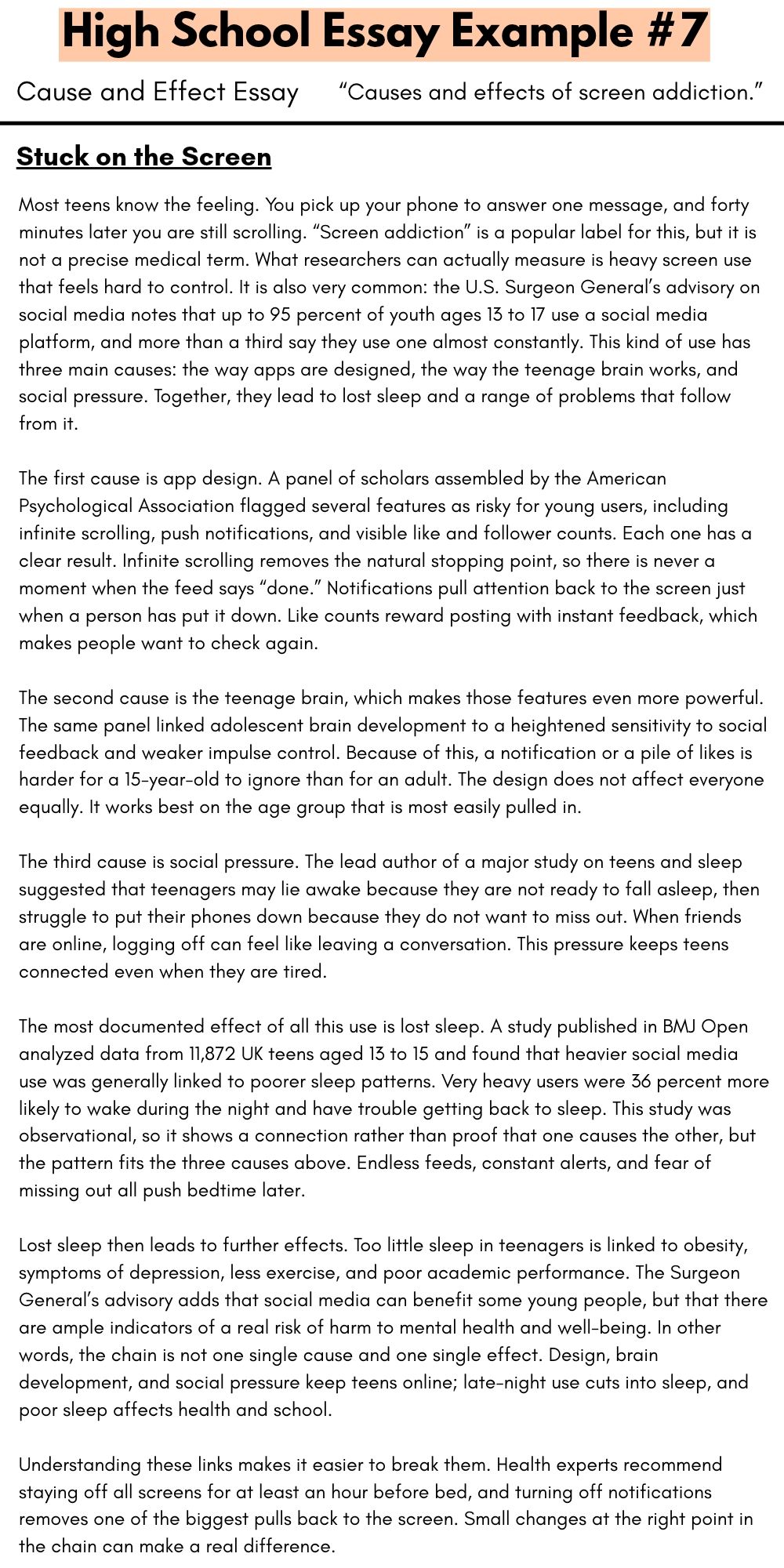
7. Cause and Effect Essay
What it is: An essay on why something happens and what comes after.
Sample prompt: “Causes and effects of screen addiction.”
Why it works:
- Links each cause to a clear result, so the logic is easy to follow
- Sticks to real, provable connections instead of guesses
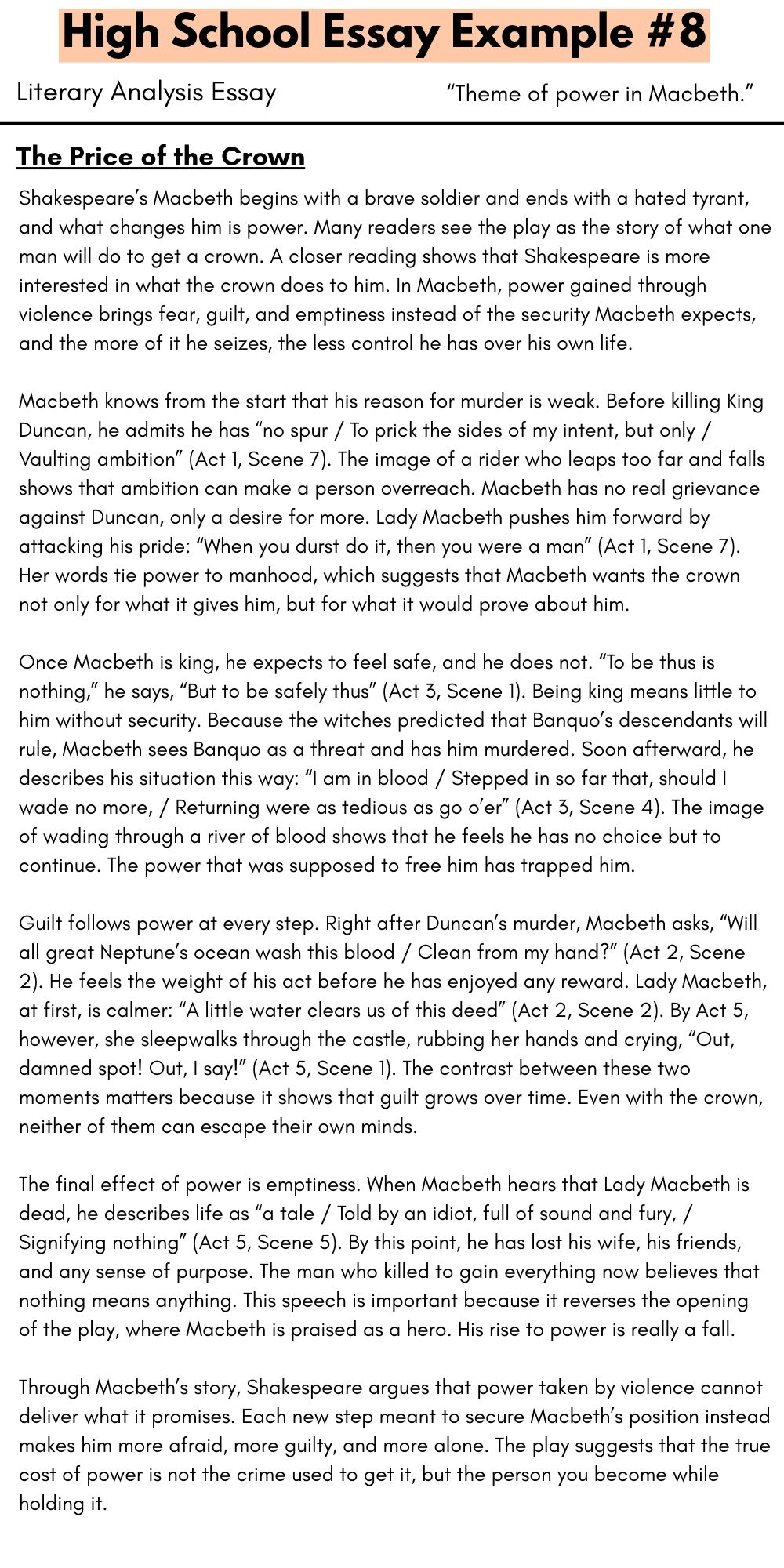
8. Literary Analysis Essay
What it is: A close look at a book, poem, or film and what it’s really saying.
Sample prompt: “Theme of power in Macbeth.”
Why it works:
- Every point is backed by a short quote or scene from the text
- Explains why the detail matters instead of just retelling the plot
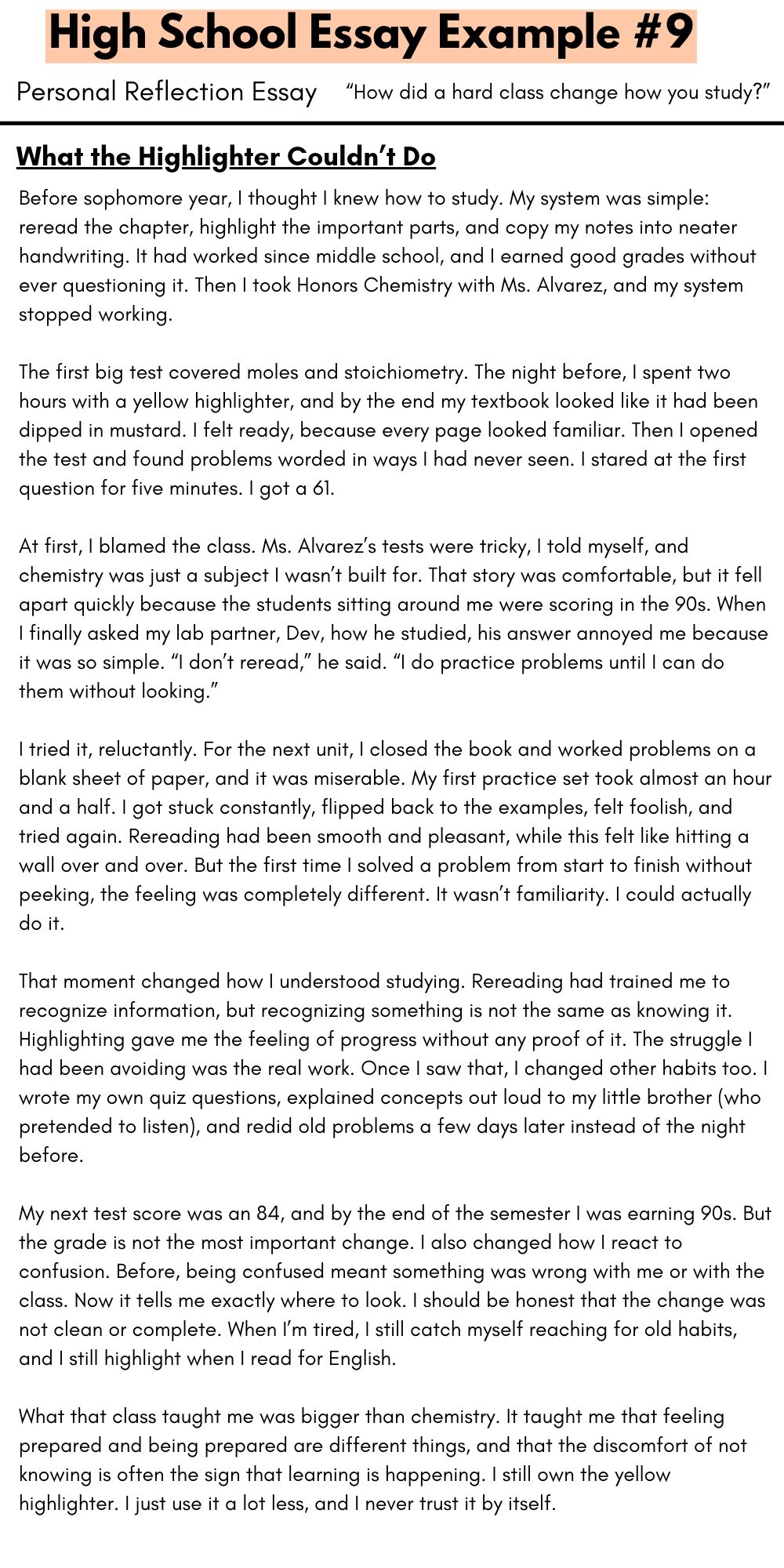
9. Personal Reflection Essay
What it is: A look back at an experience and how it changed your thinking.
Sample prompt: “How did a hard class change how you study?”
Why it works:
- Spends more time on what you learned than on what happened
- Honest and specific, with no forced life lessons
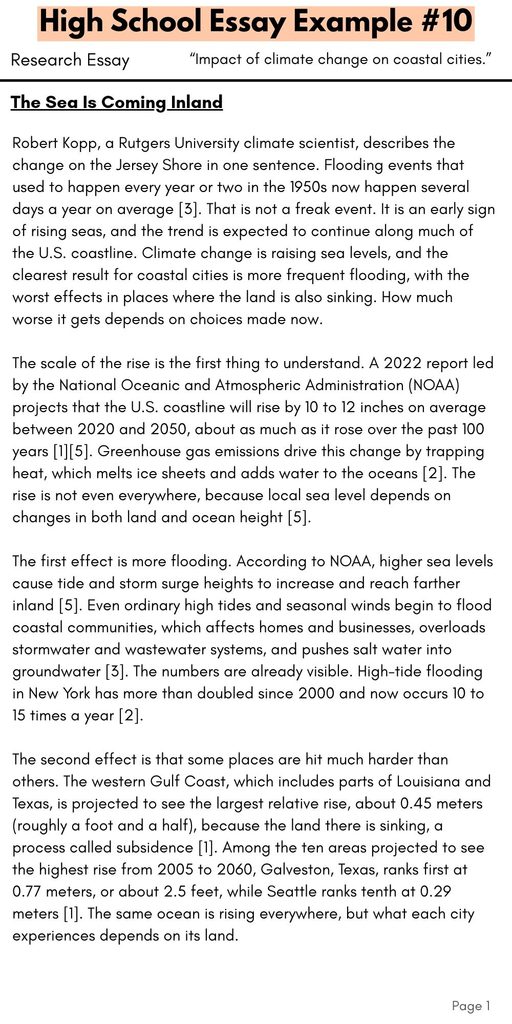
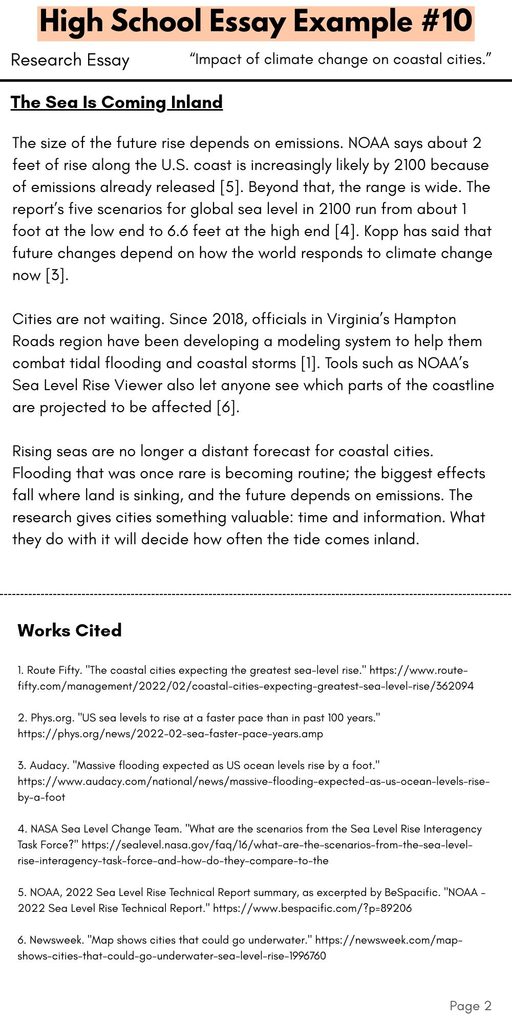
10. Research Essay
What it is: An essay built on findings from several reliable sources, with citations.
Sample prompt: “Impact of climate change on coastal cities.”
Why it works:
- Combines sources into your own point instead of stringing quotes together
- Cites everything and ends with a clear takeaway
Get the Printable PDF
All 10 essay sheets are bundled in one free PDF, one sheet per essay type, numbered to match this post.
What’s inside:
- 10 printable essay sheets (Printable #1 to #10)
- One example per sheet, laid out so you can see the structure at a glance
How to use it: Print the sheet you need, read the example, then write your own essay using the same structure.
Quick Tips
Whatever essay type you pick, these four habits make every draft stronger.
1. Hook in the first line.
Start with a question, a surprising fact, or a moment from a scene. Skip openers like “In this essay, I will…” because they tell the reader nothing. Stuck? Many writers write the intro last, once they know their main points. See how a strong introduction is built.
2. One main idea per paragraph.
If a paragraph covers two points, split it. Each paragraph should have a clear topic sentence, support, and a link to the next one.
3. Put your thesis in the intro.
Your thesis is the main point of your essay in one or two sentences. Place it at the end of your introduction so the reader knows where you’re headed. Narrative and descriptive essays can be looser, but every other type needs a clear one.
4. Proofread out loud.
Reading aloud helps you catch awkward sentences, missing words, and repeated phrases your eyes skip over. If you run out of breath mid-sentence, it’s too long. Want feedback from someone else? One of these writing workshops for high school students can help.
Wrapping up
Essay writing gets easier once you know what each type is asking for. A narrative essay needs a story with a point, an argumentative essay needs evidence and a counterargument, and a literary analysis needs quotes that back up your reading. The examples above show how each one is built. If a literary analysis is next on your list, these literary essay topics for high schoolers can help you pick a text and an angle.
Most weak essays share the same problems: no clear thesis, paragraphs that cover too many ideas, and an intro that says nothing. Fix those three and your grades will move. The skill pays off beyond grades, too, since many scholarships ask for an essay. Here are some essay scholarships for high school seniors to look at when you’re ready.
You also don’t need to master all 10 types. Learn the one your assignment needs, then reuse the same habits on the next. The more essays you write, the less you’ll stare at a blank page.

An Engineer, Maths expert, Online Tutor, and animal rights activist. I have more than 5 years of teaching experience and have worked closely with students with learning disorders. I have worked with special educators, counselors, and experts in dealing with common issues that students face during their academic journey.